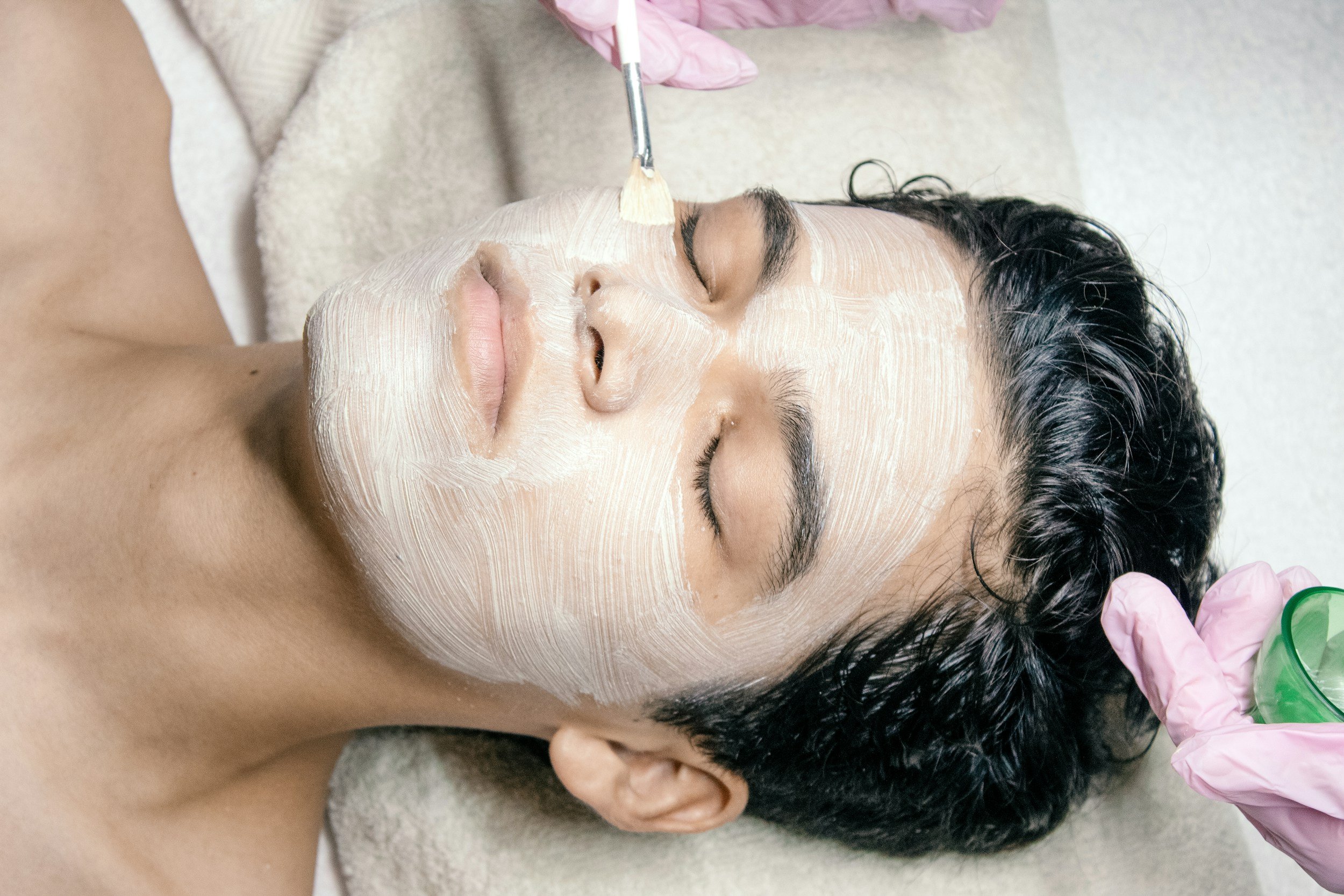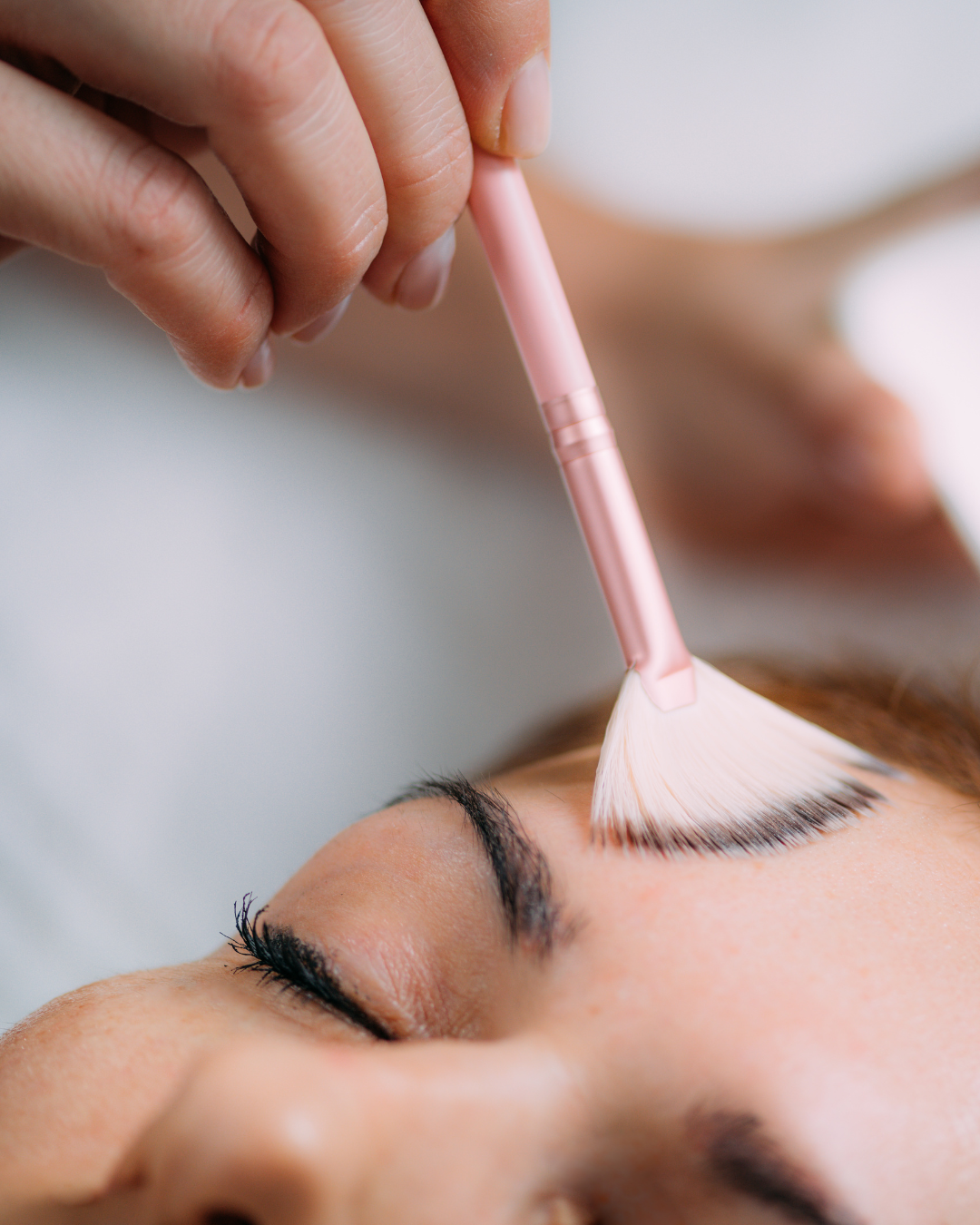
Superficial vs Medium Chemical Peels: What’s the Difference? (Professional Guide for Estheticians)
If you are pursuing chemical peel training or expanding your corrective skincare services, understanding the difference between superficial and medium chemical peels is critical.
While both treatments use controlled chemical exfoliation to improve skin tone and texture, they differ significantly in:
Depth of penetration
Acid strength and formulation
Downtime
Risk level
Scope of practice considerations
This guide breaks down the clinical and regulatory differences — especially important for licensed professionals practicing in Colorado.
What Is a Superficial Chemical Peel?
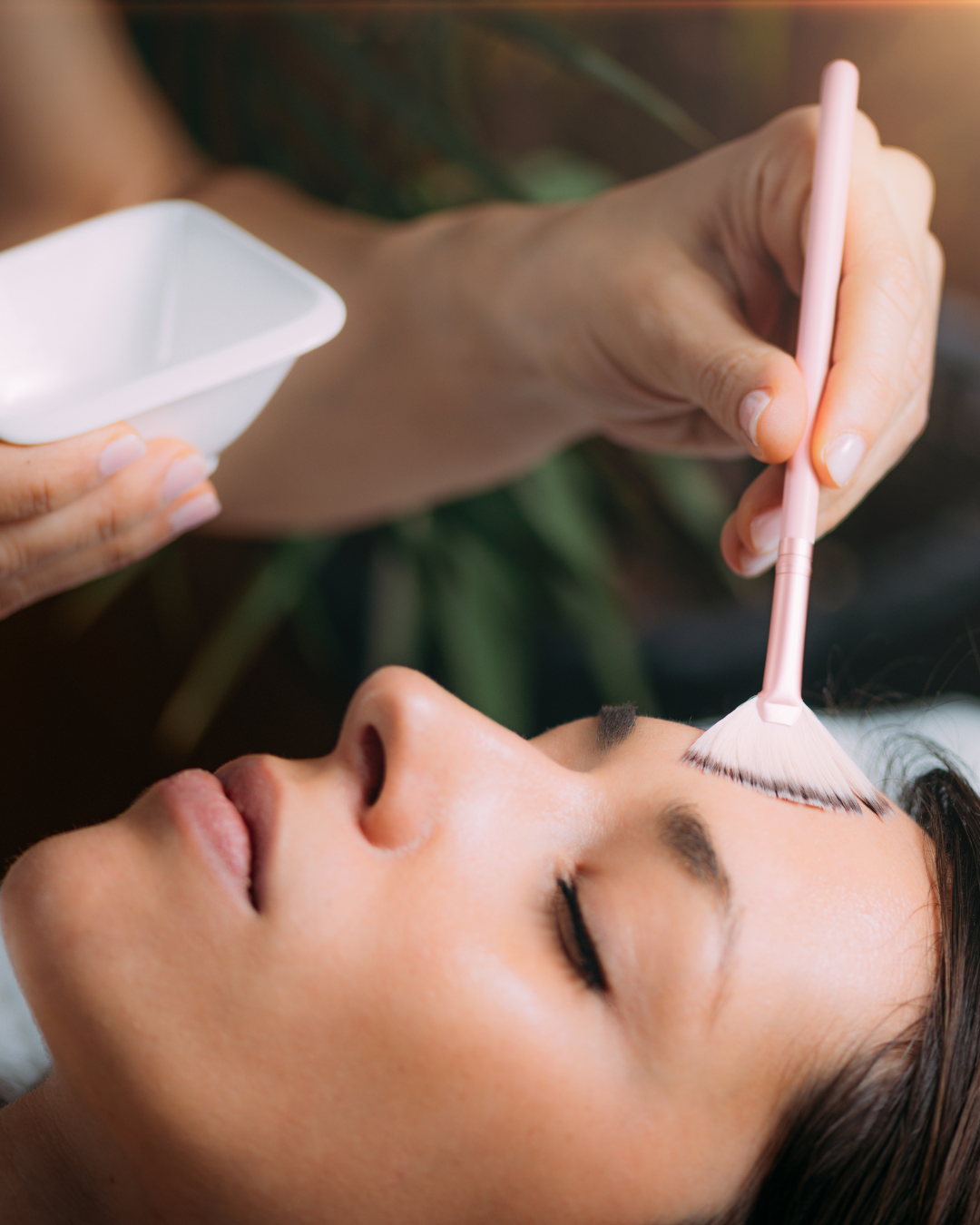
A superficial chemical peel (sometimes called a light peel) targets only the outermost layer of the skin — the epidermis.
These peels are commonly performed by licensed estheticians who have completed proper advanced training.
Common Acids Used in Superficial Peels
Glycolic acid (lower concentrations)
Lactic acid
Mandelic acid
Salicylic acid
Low-percentage TCA
Superficial peels are designed to gently exfoliate dead skin cells and stimulate mild cellular turnover.
What Superficial Peels Treat
Superficial peels are commonly used to improve:
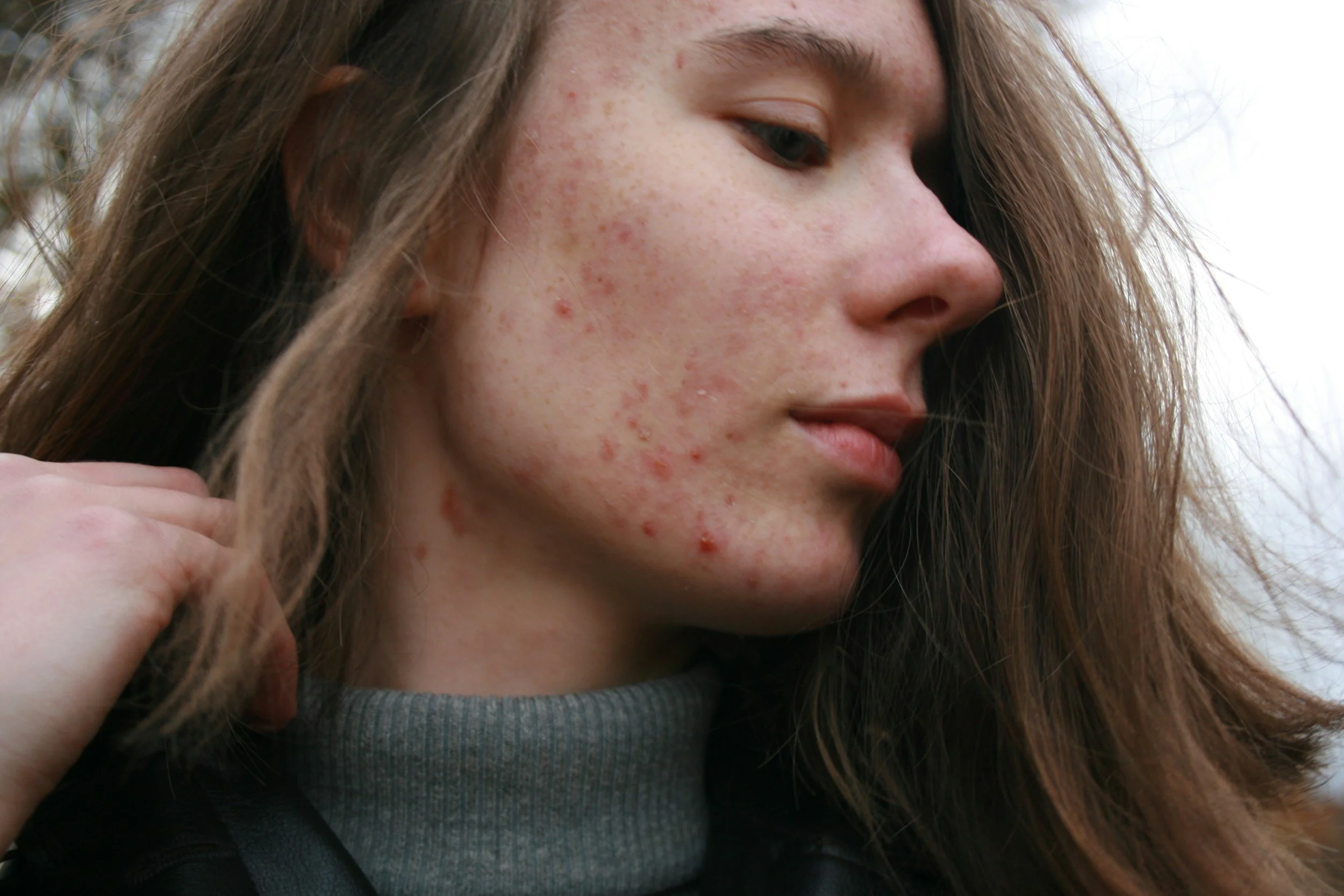
Mild acne and congestion
Dull skin
Uneven tone
Early hyperpigmentation
Fine surface lines
Mild sun damage
They are often performed in a series of treatments for gradual correction.
Downtime and Recovery
Minimal downtime
Mild flaking or dryness
Light redness
Clients typically return to normal activities quickly
Because penetration remains within the epidermis, risks are generally lower when performed correctly.
What Is a Medium Chemical Peel?
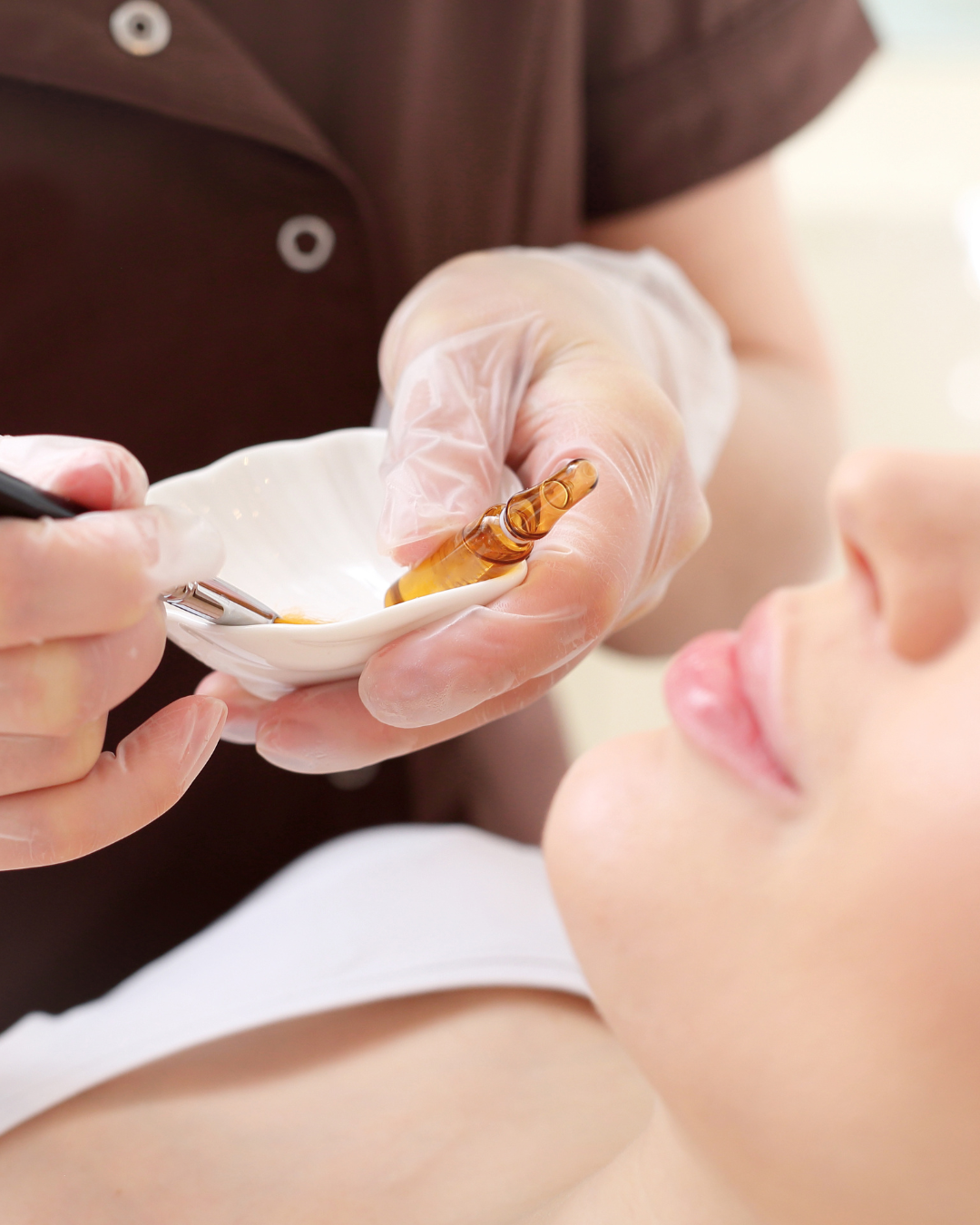
A medium-depth chemical peel penetrates beyond the superficial epidermal layer and may reach the upper dermis, depending on formulation and technique.
These peels are more aggressive and carry an increased risk. In many cases, medium-depth peels require medical oversight depending on the strength and depth of penetration.
Common Agents Used in Medium Peels
Higher-percentage TCA
Combination peels
Jessner’s solution (layered protocols)
Because of increased penetration, medium peels must be selected carefully based on skin type and medical history.
What Medium Peels Treat
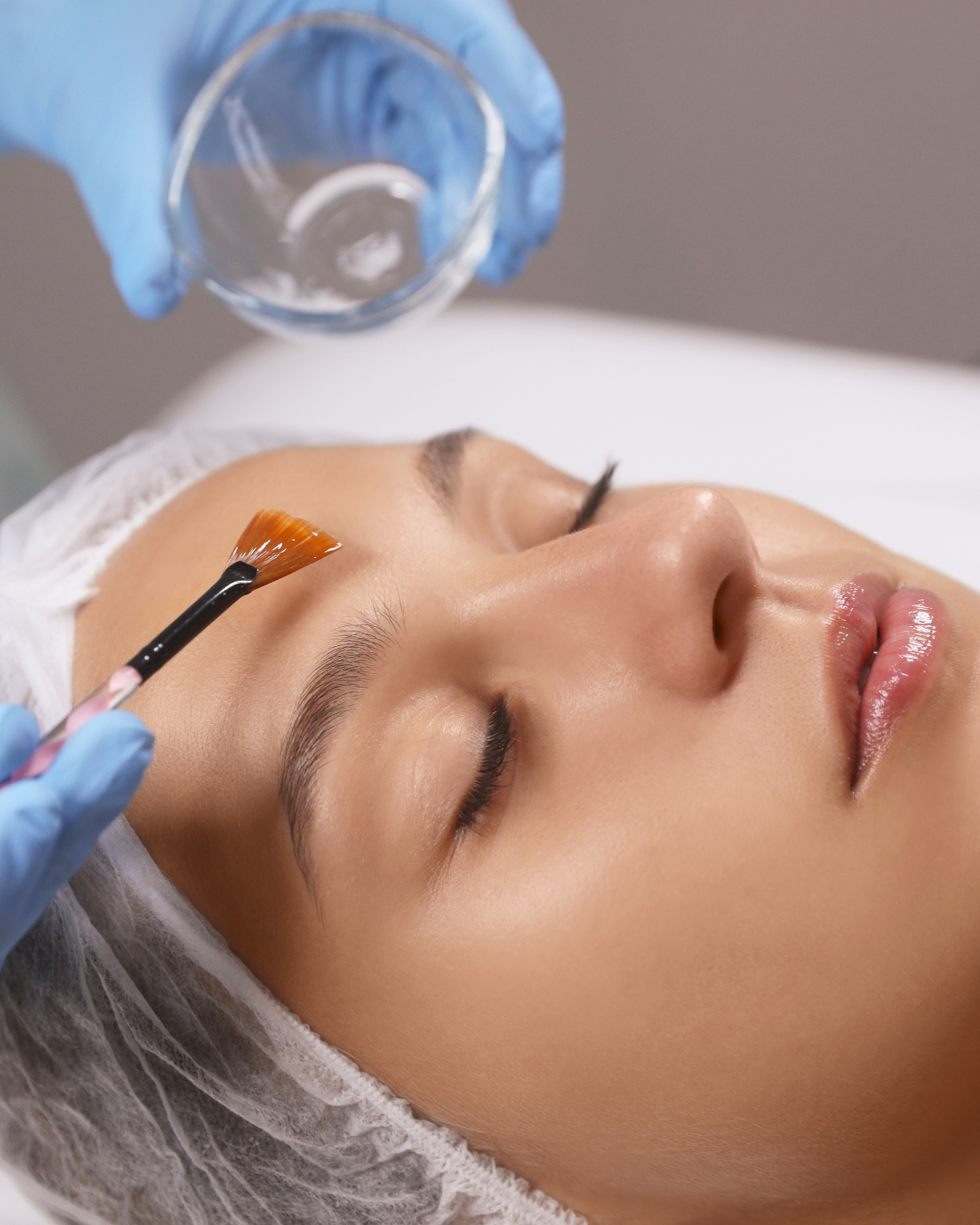
Medium-depth peels are often used for:
Moderate hyperpigmentation
Deeper sun damage
Moderate acne scarring
More advanced photoaging
Texture irregularities
They produce more dramatic results but require more recovery time.
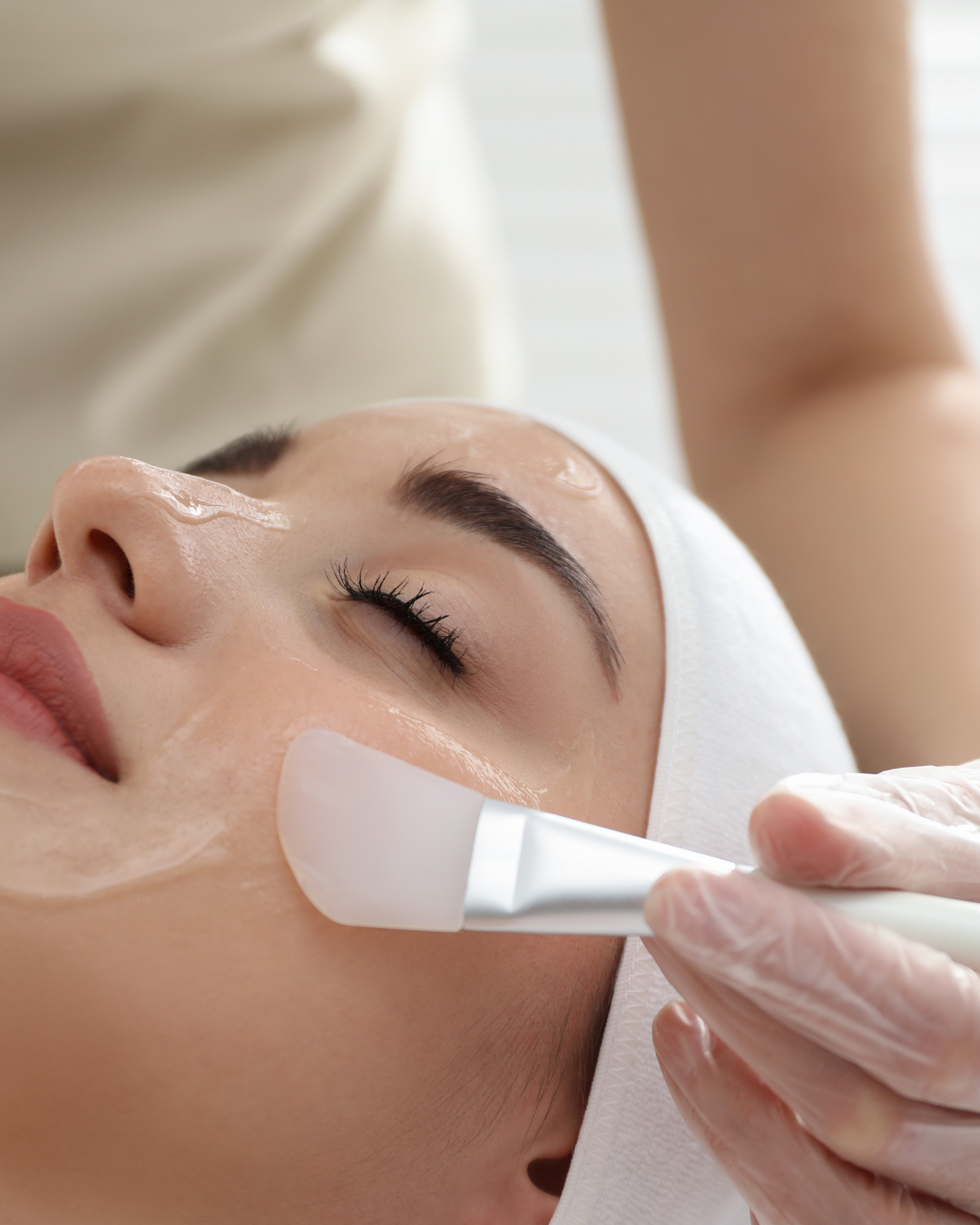
Downtime and Recovery
Visible peeling for several days
Increased redness and sensitivity
Strict sun avoidance required
Greater risk of post-inflammatory hyperpigmentation in certain skin types
Proper pre-treatment preparation and post-care protocols are essential.
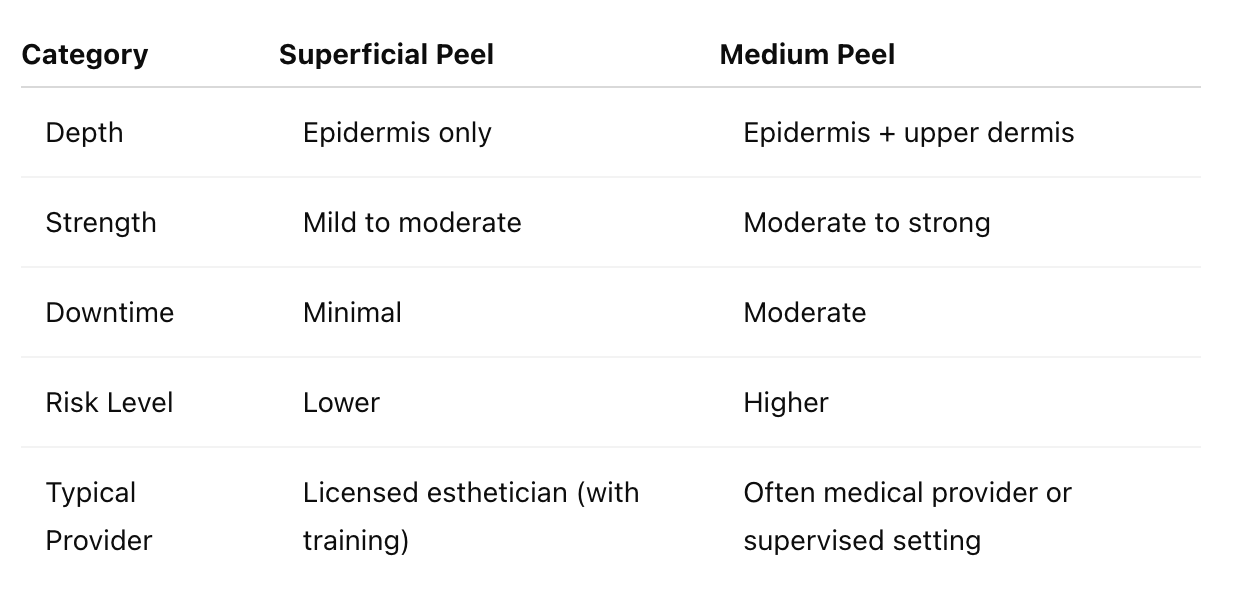
Key Differences at a Glance
Scope of Practice Considerations in Colorado
In Colorado, scope of practice is regulated by the Department of Regulatory Agencies (DORA).
Generally:
Licensed estheticians may perform superficial chemical peels within their scope after completing required advanced resurfacing training.
Deeper peels that penetrate beyond the epidermis may require medical credentials or physician supervision.
Professionals must always operate within legal scope and manufacturer guidelines.
Training programs should clearly outline what is legally permitted.
Why Proper Training Matters
Misclassification of peel depth is one of the most common mistakes among new professionals.
Without proper education, risks include:
Over-exfoliation
Burns
Post-inflammatory hyperpigmentation
Delayed healing
Client dissatisfaction
Professional chemical peel training teaches:
pH interpretation
Acid strength vs free acid value
Fitzpatrick risk assessment
Contraindication screening
Layering techniques
Complication prevention
Advanced knowledge protects both your client and your license.
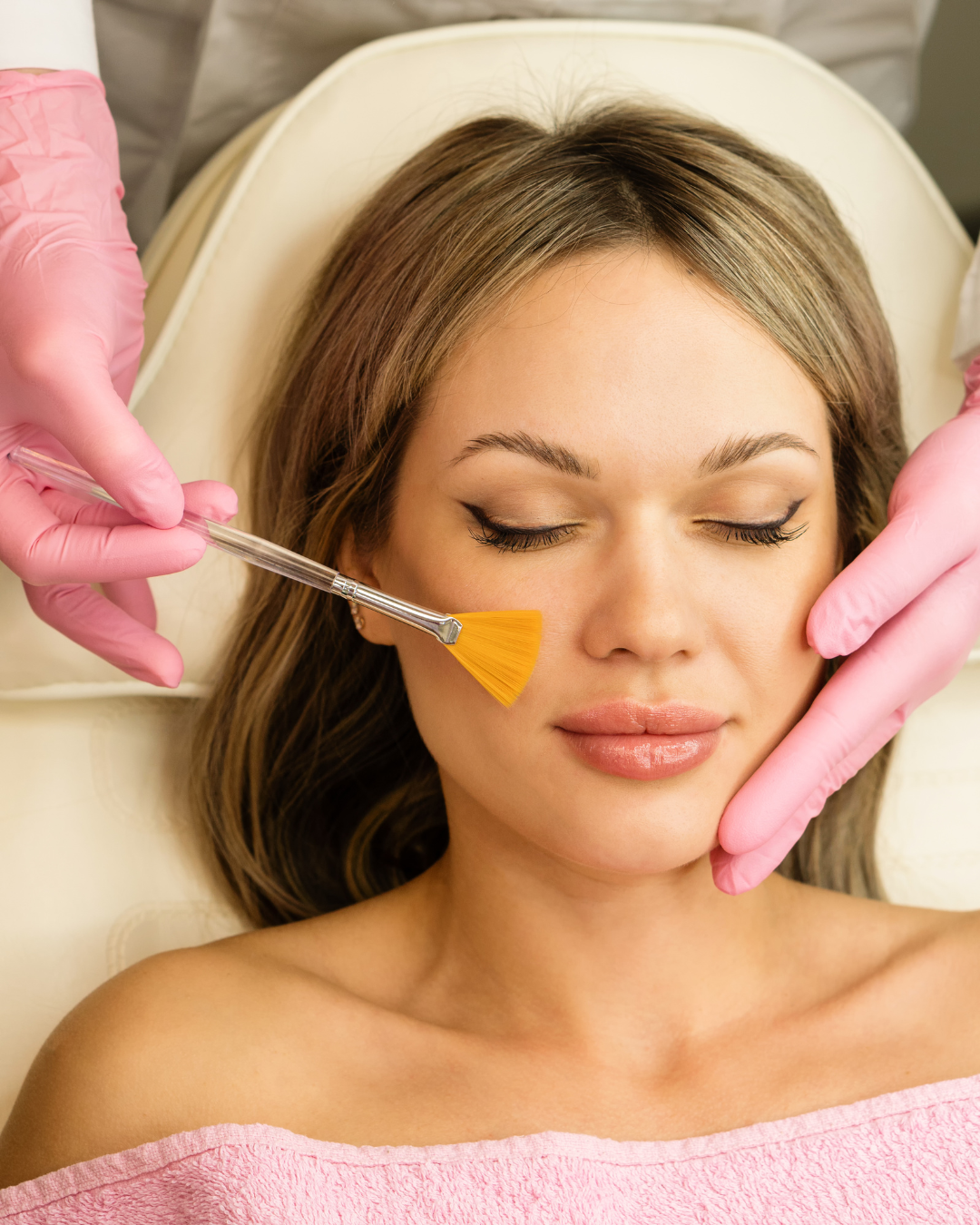
Which Peel Is Right for Your Clients?
The choice between superficial and medium peels depends on:
Client skin type
Treatment goals
Tolerance for downtime
Risk factors
Professional scope of practice
Many successful corrective programs begin with superficial peels and progress gradually based on skin response.
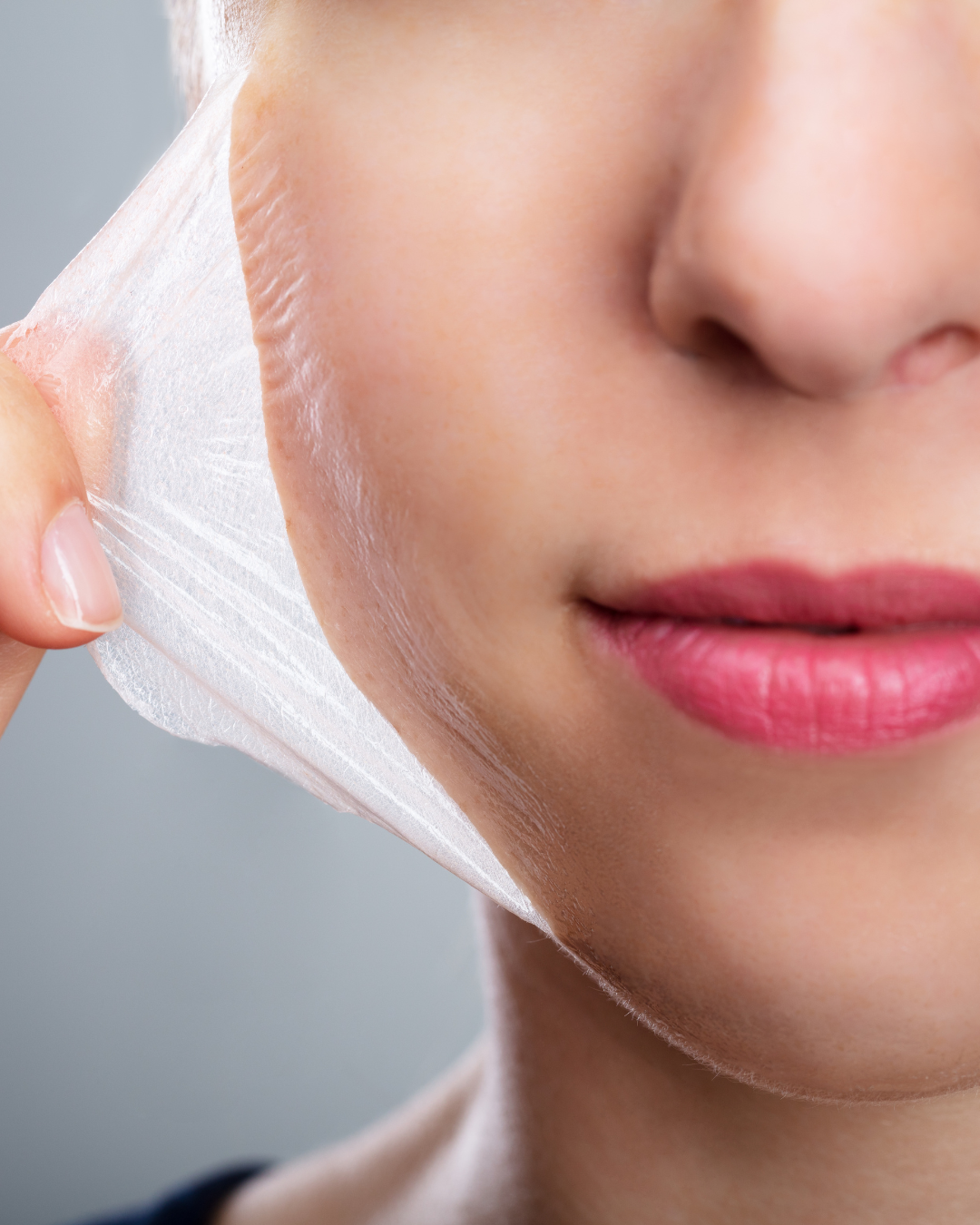
Advance Your Chemical Peel Education in Denver
Elite Aesthetics Academy’s Chemical Peel Training Program in Denver provides in-depth education on peel selection, application protocols, complication management, and Colorado regulatory compliance.
If you are ready to move beyond basic exfoliation and into results-driven corrective skincare, advanced peel training is the next step in your professional growth.
Understanding the difference between superficial and medium peels is not just academic — it is foundational to safe, effective, and profitable practice.
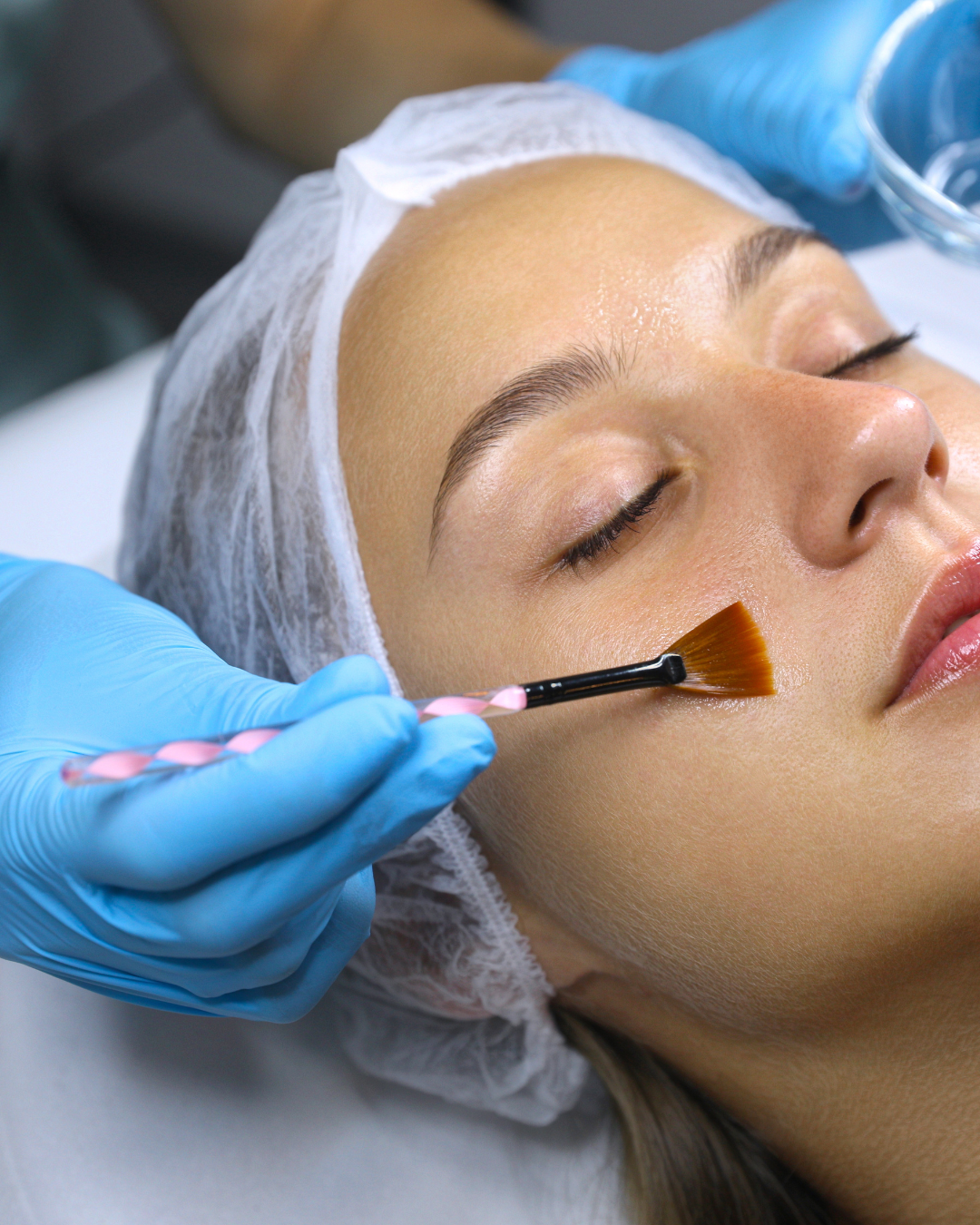
👉 Explore 600-hour esthetician license program in Denver
Start esthetics Training